Inner Worlds
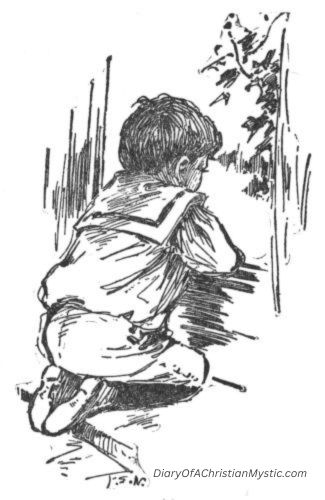
Trevor hid deep inside my mind in the way he had hidden underneath the kitchen table that day. He played with toys by himself on the inside, he would color, and he would cut on paper on the inside, too, because while little girls couldn’t play with scissors, he could.
After my brother was born and was old enough to play with toys, sometimes Trevor would come out from hiding, take partial control of my consciousness, and we would play with the toy trucks and cars beside our brother. But for the most part, Trevor remained hidden inside my mind, and I would see him only when I was navigating my inner world.
My inner world started off very basic: a large room-like space that had no definable floor or walls.
It was a room that was not a room.
A not-room.
I began unexpectedly finding myself in that strange not-room during moments of trauma, such as when Mother started beating me and wouldn’t stop. The transition process usually went like this:
First, my ears would start ringing, quickly replaced by a dull roar that impeded my ability to clearly hear with my physical ears. Second, my body would go numb, and although I could feel the blows on my body from Mother hitting me, I couldn’t feel any actual pain. Third, I would start to feel shimmery, as if the very cells of my body were vibrating uncontrollably. Fourth, I would float out of my body and hover near the ceiling, watching with detachment as Mother beat on my body, sometimes unable to even recognize myself or my mother. And finally, the physical world would start to fade, and the next moment, I would find myself in that darkened, undefined room.
The first time I found myself there, I was frightened by the sudden shift in my surroundings, and startled by the other children I saw in that space. I didn’t recognize those children as being parts of me—that understanding didn’t come until many years later—and their fixed stares as they looked at me felt hostile. It felt as if I had invaded their space, and I didn’t feel welcome. But I didn’t know how to leave, so I would sit on the not-floor and huddle up against one of the not-walls, sitting in lonely, confused silence, waiting to get back to my body.
They were the “Others” to me, and I was the “Other” to them, strangers we all were in the beginning. All Parts of the Whole that got broken up and separated, and in the midst of the chaos and the trauma, forgot our Togetherness.
But I eventually came to know them, and they me.
After my first few unexpected visits to their space, they became used to my sudden appearances and disappearances, and would barely give me a glance when I appeared. I became used to them, too, so I began feeling safe enough to start exploring the space little by little.
Time passed, and as the trauma continued—physical abuse from Mother, sexual abuse from Stepfather, religious trauma from church, and the emotional and psychological trauma that intertwined with everything else—I grew more and more dissociative. The not-room grew and expanded into a house, The Main Hall, that had many rooms, most of which were closed and locked tightly behind thick doors. The Main Hall housed the different parts of me that held traumatic memories, or, when I made friends with the Others who were open to friendship, those parts of me who would come to the surface to help when things were too difficult for me to handle in the outside world.
There were the parts of me who split off from the physical and sexual trauma at home:
Trevor who, for many years, never said a word but who played by himself with dolls and trucks and scissors. He was watchful and silent, observing everything with solemn regard, and seemingly unbothered by very much, content as he was to stay inside and play.
Velvet, a ragged little girl who cried and cuddled with her floppy-eared bunny rabbit, feeling abandoned and worn to bits by all the people in her life whose claims of love were followed by fists and belts and confusing sexual advances.
Sara, the smart one who grew up being Mommy’s helper, who knew how to be a good girl and make everyone happy. Sara loved learning and she helped us learn to read by the time we were four years old. When we were younger, she helped keep us on track in school. She never grew much past 12 or 13 years of age, but she would sometimes come to the surface of my consciousness and help with cleaning and cooking.
JoLynn, Mommy’s sassy best friend who knew how to make Mommy feel good about herself and to make her laugh without going too far.
And Jodie, pronounced “Jo-DEE!” in an exaggerated way, Mommy’s sassy best friend who went too far and got slapped because she forgot to let Mommy win pretend games of “Who is Smarter and Wiser” and “Who is Prettier” and “Who is Funnier.”
Little J, who had been forced for years into doing things that made her feel uncomfortable or that hurt. Such as Grandad (a good Apostolic man who was arrested for his part in a child porn ring years later) putting his hands under her skirt so he could adjust her panties. Or Stepdad’s best friend—who he occasionally snorted booger sugar with on the weekends—who tried to force himself on her, but no one believed her and Mother beat her for lying. Or Stepdad himself, who wanted her to play “Pretend Mommy” and “Masseuse” and give him massages in places that she didn’t want to, kiss him in places she didn’t want to, and get in the bathtub with him. Little J desperately wanted love and affection from a Daddy, but the attention she received from the male figures in her life was humiliating, painful, and confusing. And so Little J didn’t know the difference between love and not-love, and had trouble figuring out where the boundaries were.
Bidi, who laughed instead of cried and who confused pain as being pleasure, because she had never been given a choice to learn otherwise.
Jo, eventual Guardian of the Yellow and of the Main Hall, as I found out later. She appeared when I was around 15 or 16, and liked no one except the children we eventually had. She and the other Loren could never see eye-to-eye. Jo thought Loren too weak, and Loren thought Jo too abrasive, but Jo kept order on the inside so we could live life in a seemingly normal way. She was the one who demanded—and received—respect from Mother. Loren held Jo back more than she would have liked, but Jo would occasionally come out to defend us when Mother got to be too much because Jo wasn’t afraid of confrontation. She wasn’t afraid of being hit, kicked, slapped, punched, berated, or beaten.
Loren, the Other Loren, the one whose name was similar to my one of my birth names and one I later took to replace my birth name, since Mother had decided to take that name for herself and thus sullied it. Loren was another mother figure who came around at the same time as Jo; her twin, in a way. She became the Guardian of the Blue, gentle and kind, who loved everyone, but especially the brokenhearted, the downtrodden, the sick, the old, and the young. She couldn’t get along with Jo, however. They always had a hard time seeing eye to eye, and had opposing ways of resolving or facing conflict. As a teen, the other Loren often did or said things outside of my control, or even outside of my consciousness. Things that I would have been too afraid to do or say. Like when she invited a high school friend to stay with us for as long as she wanted, because her friend’s “uncle”—who was actually her pimp, but Loren didn’t know what that meant—had kicked her out of the house again because she had refused to work and she was hungry and had no place to sleep. So Loren told her friend to come stay with us, and she did. For some reason, Mother didn’t protest.
Baby Grace, who was lovingly looked after for many years by the other Loren during her years of self-imposed seclusion on the inside, represented the innocence we, in particular the other Loren, felt we had lost. When I changed my birth name several years ago, I took Grace as my middle name.
J, who stayed hidden for a long time, but who, like Jo, wasn’t afraid of confrontation. She also didn’t usually like other people, aside from our children and our friend Carolyn. She often walked around with a scowl, but no matter the chaos that was going on inside, J helped keep order on the outside: chores, taking care of children, cooking (except with the pressure cooker, which she was afraid of), and the like. It wasn’t a perfect system by any means, but her gritty attitude helped me through several very difficult years as an adult, when I started confronting and processing through all the trauma.
Victoria, a mother figure who loved all children, but especially our own, and who didn’t mind the more intimate aspects of marriage; and Dee, another aspect of me who didn’t mind intimacy.
Jane—sensible, reasonable, logical, good with numbers, and well-organized—who kept shyly to herself, was calm when helping with the children, but under most other circumstances could hardly be bothered to leave the inside space and venture to the outside world.
Charles II, who held his own strange secrets, was mannerly and calm, and unafraid of authority figures. He wasn’t scrappy like Rats or Jo or J, but had a quiet, firm, self-assurance that came from knowing who he was and where he came from. I often asked him to come to the surface when I had to do something that frightened me, like go to the doctor.
There were others: Mariah, Z, Peter, Oliver, Todd, Monty/Eugene, Poolie-Jo, and more, who all had their place on the inside.
Most were like emotions stuck inside of me, born from memories of events that were too painful to hold on to, emotions that would overcome me and affect my life in ways I couldn’t understand or cope with. Many of them held onto negative emotions, like fear or anger, but there were those who held on to joy, laughter, the good memories. And then there were Others who protected the essential parts of my soul that was unmolested, untainted, and unaffected by the darkness.
Some of the Others were more “fleshed out,” so to speak, and would come to the surface of my consciousness, helping with everyday life in the best way they knew how. Some, like the other Loren, Sara, or J would take over completely at times; but others, like Jo or Charles II or Trevor, usually just hovered near the surface of my consciousness, taking full control only if absolutely necessary, all in an effort to cope and to “appear normal.”
No matter their role, they all helped me cope with life the only way I knew how at that time: through the power of the mind, split off and separated—dissociated—from the trauma that I couldn’t otherwise escape.
Eventually, as the trauma persisted and intensified with ritual abuse at the hands of some of Mother and Stepfather’s acquaintances, my inside space evolved into to a large country, with the Main Hall being in the section labeled “the Yellow,” and I would navigate the land with Corina, an inside helper who had appeared. The country was named “Greal,” and I didn’t recognize the symbolism behind that name until much later, when I was well into my 40s.
There were several times when two men would come to our house late at night after I had already gone to bed, and with Stepfather standing guard in my bedroom doorway, they would kidnap me, taking me up the mountain to be with the Good Witch who wasn’t as good as I had first though.
(I grew up thinking the woman who the two men took me to see was one of Mother and Stepfather’s friends, Pamela, a woman I called the “Good Witch” because she worked up the mountains at the Good Witch’s Bakery in a place I refer to as Christmas Town. But subsequent research led me to later believe that the woman they worked for was more likely Pamela’s sister-in-law. But for the sake of telling what happened to me, I simply refer to the woman who lived up the mountain and traumatized me as the “Good Witch,” because as a child, that is who I believed her to be.)
And so parts of me split off from the trauma that happened during the times I was kidnapped and taken up the mountain:
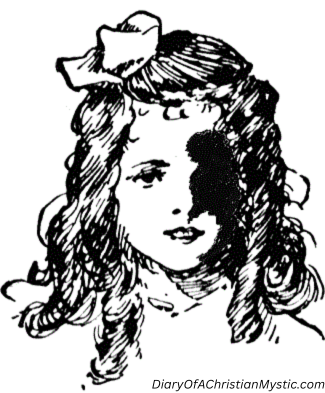
Angry Girl with a beautiful white, lacy dress, her face partially bashed in, who remembered the bad things that the Good Witch did, muttered angrily to herself, crying and screaming at the ceiling, banging her head against the walls, and yanking her hair until it was in messy, frizzy clumps sticking out from her head.
Comforting Girl, whose face was also broken, was dressed in a gown identical to the one worn by Angry Girl, and did nothing but try to help Angry Girl not feel sad.
Lala, also dressed identically to Angry Girl and Comforting Girl, who floated high above the ground, twirling her long hair around her fingers and humming a simple little tune to herself, seemingly unaware of anyone or anything else around her, and of her own partially crushed face.
Rats, a scrappy dirty little boy who was tough as any rough street kid could be. When the two men would kidnap us at night to take us up the mountain to be with the Good Witch, Rats could find his way through the dark mazes of the underground tunnels of the mountains and help us find home; home in our mind, at any rate. Home to the Main Hall where it was safe and nothing could hurt us except the bad memories held by the Others who lived there.
Corina, another internal helper like Jo, but who always stayed on the inside. She didn’t help me navigate the outside world at all, but she helped me navigate the inside world. She held on to who I really am, to who I am created me to be. She was the link to and the protector of my Spirit, my Light, not dimmed or overcome by the darkness. She was the keeper of the Light and of the Spirit, Guardian of the Green, of the Castle, and of the Greal. Many of my memories from early childhood were of spending time exploring her castle and of the adventures she and I would go on.
Thelma, full of misunderstood darkness, who knew who the Good Witch really was. She was keeper of the Dark, Guardian of the Red. Full of jealousy and rage, she fought often with Corina, trying to take over the country, the Greal, but she never won a battle. They were sisters, Thelma of the Dark and Corina of the Light, but Thelma never wanted to fully admit their kinship, and Corina could never figure out how to stop Thelma from fighting against her so much.
There were the even deeper parts of me who split off from the traumas that were associated with the deep-state-sponsored1 psychological manipulation and trauma we went through.2 It was under the direction of a man I call Dr. A, a man who Mother and Stepfather had taken me to meet in the underground office at one of the military bases in the southern California desert. The trauma involved forcing me, through physical and psychological trauma, into a state of dissociation for the purposes of particular projects Dr. A was working on with me, including one I clearly remember that had to do with parapsychology and astral travel, 3 although, as a child, I didn’t know the meaning of those words in order to describe it as such. But in processing it as an adult, I realize now what it was.
And so other parts of me had split off through those traumas:
Arby, whose name was actually RB (short for Rainbow Brite), who remembered riding on the back of her white unicorn (because she preferred a unicorn to a regular horse), flying up the rainbow of dissociation with Sprite close beside her. Sprite had a voice like Dr. A, soft and sweet, to help her hold open the door of our mind, facilitating the building of the Grid within our internal space. The Grid acted as a virtual prison, holding captive the parts of me that were created by Dr. A for the purposes of the projects he was working with us on.
David, trustworthy and solid, who never came to the outside, but who stayed hidden on the inside, holding tightly to keys that Dr. A gave to him, keys that unlocked the secret doors of our mind. Years later, David relinquished the keys to Jesus instead, and the darkness behind the closed doors were exposed to the Light of Christ and healed by the Love of God.
Skylark, who remembered Dr. A and how she would fly free from the body to work the jobs that Dr. A sent her to do. Skylark wasn’t afraid. She liked her job and she liked Dr. A. She didn’t remember anything traumatic or frightening happening to her.
Q17, who had been imprisoned inside the Grid in the cubicle numbered Q17, who sometimes interacted with the strange and frightening creatures that assisted in the underground military base where Dr. A worked sometimes.
All the Shadow Children who lived in the Grid that Dr. A built inside my mind, holding to the trauma of the “training” we went through with Dr. A in a more general way, who seemed to be nothing more than psychological placeholders, until Jesus set them free.
Starla, who said she hadn’t been created through the trauma Dr. A had put us through, but who had taken residence in the same room as the Grid within our mind nevertheless. She claimed to have been sent by God to be a Guide to help us find our way out of the Grid: to illuminate the darkness so we could find our way to the Light. She was very good friends with Jesus and claimed to know the Truth he had shown her, and when I finally stopped resisting what she was trying to tell me, and when I finally stopped fighting against her and instead listened, I was very surprised by what I learned. Set free, even.
Footnotes
- Deep State: see footnote 1 in my post, About Dissociative Disorders ↩︎
- See: “Mind Control, Parapsychology, and Media Disinformation” ↩︎
- Astral Travel (also known as astral projection, soul travel, spirit travel, among other things) — a phenomenon whereby different dimensions of reality can be navigated within or around the layers of our 3-D existence on Earth; or, depending upon the situation or perspective, outside of our 3-D existence. ↩︎
Navigation
⇐ Chapter One: Trevor
Chapter Two: Inner World
⇒ Chapter Three: Leaving the Inner World
Chapter Four: Re-entry
Chapter Five: George Learns About Hell
Chapter Six: The House That Jesus Built
 Diary of a Christian Mystic