Leaving the Inner World
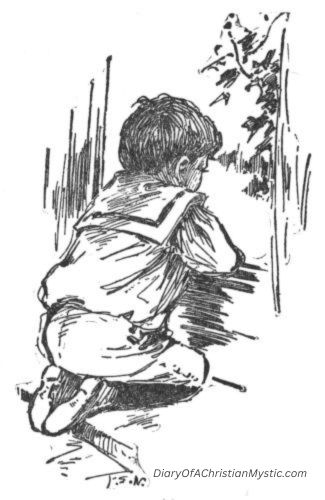
I was around twelve or thirteen years old when I was unexpectedly ejected from my inner world.
I don’t know what may have been taking place at the time to warrant me being there. Perhaps by that time, I had just become so used to going there, that entrance had become second-nature without an outside propelling force, such as trauma, to drive me there.
But whatever may or may not have been happening in the outside world, I remember clearly what I had been doing in my inside world: I had been playing with Corina, as I often was, in one of the secret rooms she had shown me on a previous visit.
One of the rooms was filled with a large map that hovered a foot or two above the floor, nearly filling the entire room. It had a holographic-type of appearance, with a 3D effect that showed detail of the terrain of the five different regions of Greal, the country in my inner world: the dry deserts of the Yellow, the craggy mountains of the Red, the mists and forests of the Purple, the lakes and streams of the Blue, and the rich valleys of the Green. On a previous visit, Corina had showed me how I could quickly jump from place to place in Greal by jumping into the 3-D map directly on the spot I wanted to go.
The other room was separated down the middle by a swiftly-flowing river that spanned across the room from one bright white wall to the next, flowing underneath a wide glass bridge.
On one side of the stream, a large and curious type of tree had been planted a few feet from the banks. It had leaves like a normal tree would, but in place of fruit, it bore five different types of brightly-colored gems—yellow, red, purple, blue, and green—that were interconnected by thin wooden sticks and arranged in a peculiar geometrical pattern in a way that resembled a giant tree made of connector toys.
On the other side of the stream, an oversized ornate throne was situated against the wall, and a door on the wall that led to a room behind the throne that had gone unexplored because it was locked.
Corina and I would spend what seemed like hours at the top of the Glass Bridge overlooking the water below, watching the brightly-hued fish swim along the current—
one fish, two fish, blue fish, red fish
—shouting gleefully when one would jump out of the river, its colorful body arcing and its tail flipping furiously.
“Two red!”
“I saw one yellow!”
“Look! There’s a green one!
On the day that I was kicked out of my inner world, I was there, on top of the bridge with Corina, watching the fish jump and swim, when I heard a loud rustling from my right. I pulled my eyes away from the water and turned my attention towards the sound. The noise had come from the funny-looking stick tree that had unexpectedly transformed itself into a real tree (“real” being a subjective term, of course), with brightly colored fruit hanging low from its thick gnarly branches.

I stood up straight, my fingers still clutching onto the handrail of the Glass Bridge, and fixed my attention on the tree.
“How strange,” I thought. “What’s going on?”
Corina had been standing on the parapet, stretched out on her tiptoes, practically dangling over the railing, engrossed in watching the fish, and my sudden silence drew her attention. She looked in my direction. “What’s wrong?”
I pointed at the tree with my finger. “Look,” I said.
She jumped down to the bridge decking, her eyes following the direction of my finger. “What happened?”
“So weird!” I exclaimed, and started down the bridge towards the tree to investigate.
She grabbed my arm, holding me back. “Maybe you shouldn’t,” she warned.
I shrugged her off. “Why? What could go wrong?”
Then the Bridge spoke up, startling both Corina and myself. “Maybe you shouldn’t do that!” Its voice sounded gravelly and grave.
I looked down at the deck of the Glass Bridge beneath my feet. The glass was thick, too thick to even see through to the water beneath it, but it was textured as if it were cobblestones. The Bridge had never spoken before today. I didn’t even know it could!
“What could go wrong?” I repeated to the Bridge. “It’s just a tree.” I shrugged and turned to look at the tree again. “And you’re just a bridge,” I thought to myself. “What do you know?” And so I started down the Bridge and towards the tree, leaving Corina by herself on the Bridge.
“Don’t say I didn’t warn you!” the Glass Bridge called after me.
But I ignored him, and reaching the tree, tugged on a piece of fruit—a fat blue plum—and pulled it from the branch.
A fierce wind suddenly blew into the room, and roaring with the intensity of a tornado, it twisted and spun quickly towards me, sucking up grass and water and walls and floors, and spitting everything out like splinters behind it. I stood beside the tree and watched, the piece of fruit still in my hand, paralyzed with shock and terror, watching as the world around me began breaking up into tiny slivers of nothingness.
Behind me, I heard Corina scream and the Glass Bridge moan, “Oh, I told you so, I told you so!” His voice propelled me from my shock, and I turned and ran back towards Corina and the Bridge, screaming, “Help me, Corina! Help me!”
She started running towards me, reaching for me as if we could both hold on to each other in safety, but the tornado came between us and we were thrown in two different directions: her inward, and I outward. The last thing I saw as I was sucked away, out of my inner world, was the Bridge exploding into millions of tiny glass shards and Corina’s face contorted with a scream I could no longer hear.
I spent a period of time—weeks? months? I’m not sure how long—mourning the loss of my internal world. I tried to reach Corina and her castle in the Green, but everything had been lost, and I had no idea why or how to get it back.
Mother would beat me and I would fly out of my body, but I couldn’t go further than the ceiling. I had ben expelled from my inner world. And I felt lost.
After a while, I started to forget. As the days and weeks turned into months, I forgot about Corina and about Thelma. I forgot about the Greal, the Green and Yellow and all the other spaces. I forgot about the Main Hall and all the Others who resided there.
Eventually, the memories of all the trauma that had forced me inwards were repressed into my subconscious by my traumatized mind. Trying to survive Mother’s ongoing abuse took up every bit of mental and emotional energy I had, and for the sake of my very survival, everything else got pushed back.
I never forgot about Stepdad’s sexual abuse; but my mind rejected associating his actions with words like “rape” or “pedophilia,” a rejection perpetuated by Mother’s continued denials.
I didn’t forget about Stepdad sometimes standing in my bedroom doorway at night with two other men, one taller and thinner than Stepdad, and the other one about the same height but a little fatter than Stepdad; but I was too dissociated to recognize or name what came afterwards. Any small snippet that was remembered—a hand over my face; a pillowcase shoved over my body; my body slung over a shoulder and carried outside; waking up in the back of a car disoriented and feeling nauseous, the cloying smell of the wet pine trees of the mountain forests filling my nostrils—I dismissed as not being noteworthy. I couldn’t connect the memories or describe them as being a kidnapping, even though that is exactly what it was.
I remembered moving to Watermelon house, named thusly because the house was close to Waterman Avenue, but I liked to call it Watermelon Avenue. It was the house with a large basement, an unusual addition for an earthquake-prone area. Because Mother worked, my brother had a babysitter for most of that summer, but as usual, I was left home alone with Stepdad. I remembered Watermelon house was on Leroy, a couple block from the hospital, and how Stepdad would walk me there sometimes. But I had buried the memories of the trauma that took place down the less-traveled halls of that hospital.
I always remembered the day I was screaming and running from Stepdad and Mother’s room in Watermelon house, and how I had jumped onto my bed and floated high above my body; but I dissociated from why I’d been running away in the first place. My mind rejected associating myself with the word “rape.” But I never forgot about seeing four Others with me that day as I floated near the ceiling. There was one little boy sitting on the floor, playing with cars, and three little girls in identical white dresses, hovering off the ground: one trying to comfort me, one screaming at me to shut up, and one humming to herself as she floated by the bedroom window.
trevor, comforting girl, angry girl, lala
Once I had reached my teen years, I was able to recognize those Others as having been different parts of myself; but I repressed the memories of the events that had caused me to splinter away from my consciousness, creating those parts of me.
I could always recall visiting the military bases with my brother, mostly for air shows that Stepdad loved so much. And although I had unconsciously squashed the memory about the time I’d met Dr. A during one of those visits, I could always remember waiting in the room outside his office with Mother beside me, working on a bit of cross stitch, the letters N-O-E-L, and how I hated working the needle because of sensory issues that weren’t acknowledged in that day. But I repressed what came afterwards, because it was too close to the truth. Too close to the trauma.
I always remembered the awful memories stuck in my head about children who were trapped in cages in an underground storage basement in the desert that smelled musty with mold and reeked of urine; of military uniforms, a dog straining against a tight leash, and spit-shiny shoes that clip-clip-clipped on the dirty concrete floor; a faceless voice: i love you i love you not; children stretched out on a round red bed. Memories of strange parties in darkened rooms that smelled of unusual smoke; a mirror with lines of white powder set on a dark round wooden table; young girls with tiny dresses and bright red lips sitting on men’s laps and one girl, older than me but still young, showing me how to sit, and Stepdad laughing because I didn’t want to; a snarling dog and a thick chain wrapped around a child’s neck while Stepdad and his friends laughed. Memories of mountain caves and of blood pooling on a concrete floor and spilling down the drain in a slow trickle; of a woman with frizzy red hair warning me—don’t spill a drop!—and carrying a wine-filled chalice down a makeshift aisle of a cave where a pope was presiding over a ritual taking place, while a queen1 looked on; of children being hunted in the caves by thirsty madmen dressed in fancy clothes and of the queen who had morphed into a large reptilian-like creature.2
But how could those things be? I couldn’t comprehend it, and I didn’t know how to walk around and live every day life with the incomprehensible truth weighing me down. So when I was young—nine? ten? I’m not sure—I wrote some of them down in a notebook, desperate to get them out of my head. I had dissociated from the events themselves, left only with fragments of memory jumbled up and disconnected from another, and so I tried to get them all out of my head by writing. But when Mother read what I had written she became angry—frightened, more likely, thinking about it in retrospect—asking me what awful thing was in my mind to make me write such horrible stories; then she forbade me to write anything like that again.
So for years I was convinced that those stories in my head were bad thoughts that had come from my evil imagination, because I was a bad girl who thought bad things; thus, my dissociation was reinforced, and I unconsciously rejected naming the stories for what they really were: traumatic memories.
Life got very busy with major life changes: moving again to another state, starting a new school in the middle of the year, puberty hitting with full force.
With the move, the most heinous abuses had ceased. But Mother would still go through terribly violent episodes, and as perfect of a daughter as I tried to be so as to not “set her off,” her moods and resulting wrath could be very unpredictable.
I still could lose myself in books, and I usually did, but with my inner world gone—even the conscious memory of it gone—my escape options were more limited, and I walked around feeling like a zombie most of the time. Sometimes I would enter into a momentary state of confusion about who I was at that moment, confused about who other people were, confused about where I was and what I was doing. But most of the time, I walked around like an empty shell, deeply depressed, feeling as if I were stuck inside a stranger’s body, seeing or hearing what was I was doing or saying, but without any control: looking through the eyes of someone else, hearing words come out of a mouth that was not my own, walking in someone else’s shoes, seeing a stranger’s reflection in the mirror.
As hard as I tried, it was difficult to please Mother. Her rules and boundaries were as shifting as her moods, and she would become enraged at me over made-up grievances or resentments towards me that she would use as an excuse to take out on me all the anger and rage she felt over her own life. I couldn’t win. I was damned if I did, and damned if I didn’t.
For example, one afternoon I got permission to go on a joy ride with a Jennifer, a girl who lived across the street. She was a sweet, but slightly sassy, Christian girl from a Mormon family and was homeschooled. She was my sort-of friend; a friendly acquaintance that I could occasionally hang out with when Mother gave her permission. I wanted to be Jennifer’s good friend, but Mother would only allow limited interactions.
On this occasion, a family friend had been visiting Jennifer and he had a cute convertible car. Jennifer, fascinated with the car, wanted to take it for a spin with me, so I asked Mother, and to my surprise, Mother said “yes.”
Jennifer and I rode up and down the two main highways in the small town, the convertible top rolled down, singing along to Christian music, laughing and joking around with each other, avoiding the interstate, which had been a stipulation of our temporary freedom. After about an hour, she drove back to our neighborhood and parked the car in her driveway. We said goodbye to each other, she going inside to her house, and me walking across the street to mine.
When I walked into my house, Mother’s demeanor had changed significantly from how she had been an hour or so earlier. She said that someone had telephoned her and told her they had seen Jennifer and I riding around town, listening to rock music that was turned up too loudly, looking like we were having “too much fun.” Mother had somehow convinced herself that boys had been involved, and she accused me of driving around town with Jennifer, having “fun” with boys in the back seat.
I was flabbergasted! Why was Mother so angry all the sudden? Where had Mother gotten these ideas? Why was it suddenly bad that I had gone for a drive with Jennifer? Why was it bad to have fun? To drive around and laugh and sing to loud music? Christian music, at that! And why did she think there had been boys in the car with us? What boys? There had been no boys! Even if we had thought of it, I knew of no boys to pick up, and neither did Jennifer! Where would we have found boys to pick up?
But my denials and protests only further enraged her, and she starting slapping me, then punching me.
I stumbled out of the foyer and down the hall towards my room, trying to get away from Mother and her anger, but she was close on my heels, pummeling me with sharp fists. She grabbed my hair and yanked painfully, and bright spots swam in my vision. She beat me with one fist and gripped my hair with the other, wrestling me to the floor, forcing me to bow helplessly before her as if I were paying obeisance.
I grabbed my head, trying to ease the tension on my scalp and to prevent her from bashing my face against the floors as she’d done many times before. As the moments stretched into minutes, I began feeling afraid for my life. Mother’s rage wasn’t abating. Was this how I was going to die? In such a brutal, dehumanizing fashion? Over a car ride and imagined boys? How ludicrous. How humiliating.
And I snapped.
It started off as the feeling of detachment that I had become used to: my body went numb and I couldn’t feel the pain of the blows against my body.
I was grateful for the detachment, and as the familiar roaring sound began to fill my ears, I had a strange thought, seemingly out of nowhere: “Corina. Where are you?”
“What a strange thought,” I thought to myself, having forgotten about the inner world I had previously inhabited. Having forgotten about Corina. Who was Corina? “Who am I?” I thought.
But before I could ponder the peculiar nature of that thought, another thought flashed into my mind—two unfamiliar names, Jo and Loren— and their faces swam in my inner vision. I suddenly felt as if my body were split into three parts: myself and two Others, Jo and Loren.
Of its own volition, my left arm quickly darted upwards and clawed at Mother’s scalp, grabbing a handful of her hair and twisting it around my fist. But I couldn’t feel my arm. I couldn’t feel my fist or Mother’s hair clenched therein. Jo, as I came to understand much later, had taken firm control of my body and of the situation.
Words that were formed by a thought that wasn’t my own, came out of a mouth that I couldn’t feel, and Loren, who I came to know later, addressed Mother by her first name. “Let go of our hair,” her words quietly demanded through gritted teeth.
Mother still had a fierce hold on our hair, but the second fist she’d been using to beat us had quickly become engaged in protecting her own scalp, and we stood bowed towards each other in the middle of the hall, holding tightly to each other’s hair.
Mother was infuriated, and she screamed. “You bitch! Let go of my hair! You let go right now!”
Her voice sounded hollow and thin, as if she were hollering from the end of a long tunnel and I at the other end, listening to the distant reverberation.
Loren spoke through my mouth again, from emotions that I couldn’t feel. It wasn’t anger—Loren was shockingly calm—so what was that feeling? I couldn’t reach that feeling to even name it.
“You let go of our hair first, and we’ll let go of yours,” Loren replied.
Mother wasn’t giving up so easily. “Let go of my hair right now! You let go!”
But Jo and Loren weren’t giving up, either.
Jo refused to loose her grip on Mother hair—“I sho’ ain’t lettin’ go now, uh-uh!” she screeched inside my mind with a bark of laughter. “In fo’ a penny in fo’ a pound, I got dis bitch’s hair!”—while Loren replied with a composure that I couldn’t feel. “No,” Loren said to Mother. “You let go first, and then we’ll let go.”
I couldn’t have been sure, but it sounded like Mother whimpered at that moment. “No!” Mother insisted stubbornly, giving my head another yank that I no longer felt. “You let go first, then I’ll let go!”
Jo gave her own yank on Mother’s hair, and Mother hissed and shrieked.
“Guess she ain’t used to get’n it back, is she?” Jo howled with laughter on the inside.
“Let’s let go at the same time,” Loren suggested, and Mother nodded her head in agreement, a feeble effort considering how tightly Jo was holding on.
As Mother’s hold loosened slightly on my hair, Jo reluctantly loosened her hold, too, none of us fully trusting our tentative cease-fire until after we had finished disentangling ourselves.
We stood there in the hall looking at each other—Mother, Loren, Jo, and myself—chests heaving. Loren and Jo settled back inside my mind, ceding control of my body, but close to the surface where I could still feel them and see them with my mind’s eye. I marveled at the feeling and at the images of them, wondering what it meant.
Mother was glaring furiously at me, her hair wild and matted. She attempted to smooth the knots, still shooting darts at me with her eyes, and I realized my hair probably looked just as gnarly as hers.
“You’re a whore!” Mother finally spat at me.
I looked down at Mother’s protruding belly, where her boyfriend’s child had been growing for a few months now, feeling Jo’s roar of laughter on the inside from a place I couldn’t understand that day.
Regardless of how I felt about her boyfriend, and to the contrary of the religious training I’d been raised with, I had never thought Mother’s unplanned pregnancy to be an indication that she was a “whore.” But the irony of Mother’s accusation struck me, and I shook my head in disbelief at the gall Mother had to accuse me of being a “whore” for a simple joy ride with a friend.
Mother was the one who, for some time now, had been having frequent noisy sex with any and every man she could find to bring home. And now she was pregnant by Larry, the man she’d decided to obsess over, a man who didn’t love her, a man who didn’t want to marry her, and who had never and would never ask (in spite of Mother’s delusional claims that they were now engaged). Pregnant by Larry, who, much to my dismay, increasingly preferred my company to hers, making sexual advances towards me that Mother had refused to believe.
And I was the whore? Why? For what?
At that moment, I felt disgusted by Mother. Not by her physical condition, but by the condition of her ugly, dark heart that had no love for Truth. Would she ever learn?
Mother saw the look on my face and my silent regard for her pregnant belly, and her fury was reignited. She raised her arm to hit me again, her fingers curled into a fist, but Jo suddenly took control of my body again and deflected the blow, grasping Mother’s arm with a vise-like grip.
“No,” Jo stated coldly, meeting Mother’s eyes with her own steely, narrow gaze.
“That’s enough,” Loren added.
Mother glared at us for several moments, her green eyes going black with a smoldering gaze that would have—and had, many times—frightened and intimidated me on any other occasion. But Jo wasn’t intimidated, and Loren wasn’t interested in further confrontation.
Finally, Mother yanked away from Jo’s grip and she hissed “whore” one last time before walking away.
Afterwards, Mother created opportunities to speak ill of Jennifer, calling her names and saying how much of a little whore she was. So Mother would stop with the hateful, untrue talk that was becoming a constant stress to me, I found it easier to just stay away from Jennifer after that.
That was how Mother spoiled friendships throughout my life, or potentials for friendships. It was all about control: if she couldn’t insert herself into my relationships and control them by stick or by carrot, she would find a way to drive a wedge into that relationship and alienate me.
I wish I could say that was the end of Mother’s abuse, but it wasn’t. She remained physically violent until the day Loren and Jo ended her abuse a couple years later, after our first baby boy was born. And the end of the control, the manipulations, the projecting, the gaslighting, the lies, the tantrums, the petulant silent treatments, and the constant mind games I couldn’t win didn’t come until I was in my 30s, when I finally walked away from her for good.
That was when I started to remember. And when I started to finally heal.
Footnotes
- “while a queen looked on” — I didn’t know who she was then, but several years later, as a teen, I recognized her from pictures as having been Queen Elizabeth II, recently passed. After spending several years processing my memories, I realize there are multiple possibilities to explain what I saw that night, including the theory that she had not taken a reptilian-type of form as it had seemed, but that perhaps the humanoids had taken her form, whether with her permission and foreknowledge, or without. Whatever the case, it’s one of those situations where I’ll likely never know the truth, so it’s useless to try to figure it out. The biggest question I have, however, is: “why was I there in the first place?” That’s what has really bothered me over the years: the why. But I don’t know why. Aside from being there to carry the goblet of wine down the aisle, no one ever told me why I was there. So likely my involvement was, for them, a matter of convenience: I happened to be available that particular night, whereas others weren’t. For the sake of resolution, it’s not a very satisfying answer, but it’s the only one I can figure out.
↩︎ - “a large reptilian-like creature” — when I was young, I didn’t know the word “Reptilian,” but as an adult, in coming across others who have experienced the same types of things I have, including my late friend, Carolyn, I realize now that’s likely what they were. I remember seeing these types of creatures in only two places: in the cave the night of the ritual, and in the underground military bases where Dr. A worked.
↩︎
Navigation
Chapter One: Trevor
⇐ Chapter Two: Inner World
Chapter Three: Leaving the Inner World
⇒ Chapter Four: Re-entry
Chapter Five: George Learns About Hell
Chapter Six: The House That Jesus Built
 Diary of a Christian Mystic